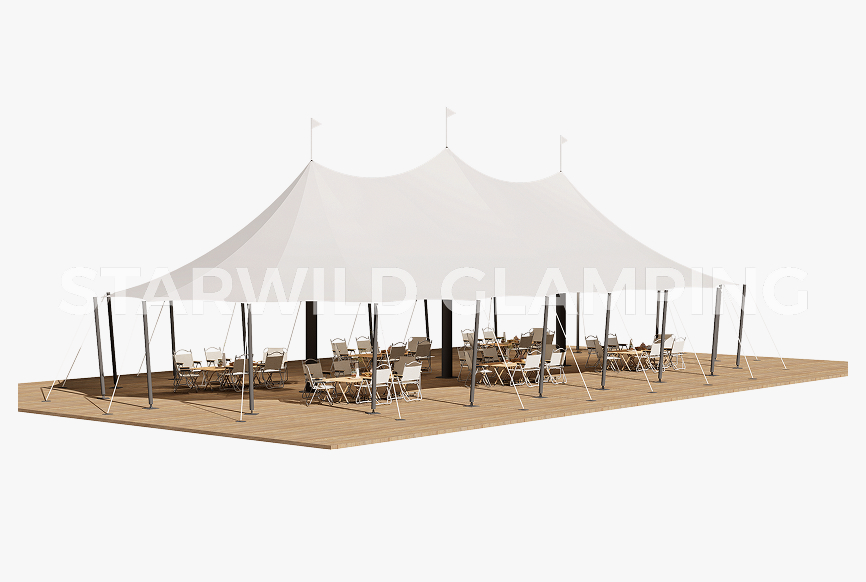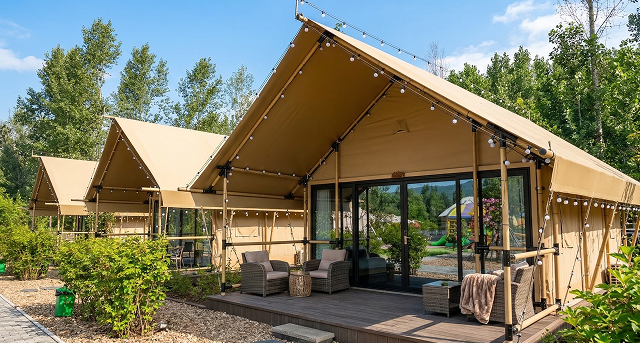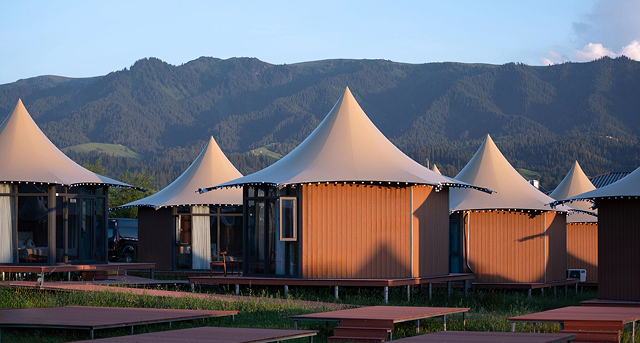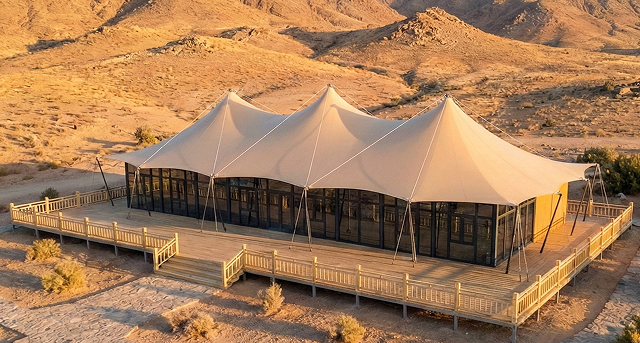

In the highly competitive outdoor hospitality market, seasonality is the ultimate profit killer. Many glamping site operators and resort owners in America and Europe experience high occupancy and premium rates during late spring and summer, only to shut down or operate at a loss during winter freezing or peak summer heatwaves.
To maximize Return on Investment (ROI) and build a highly profitable hospitality brand, transition your property to a year-round destination. Achieving this requires high-performance, 4-season glamping hotel tents designed to withstand nature's extremes while delivering an uncompromising luxury guest experience.
This comprehensive guide analyzes the advanced engineering, specialized materials, and thermal solutions necessary to build and maintain an all-weather glamping resort.
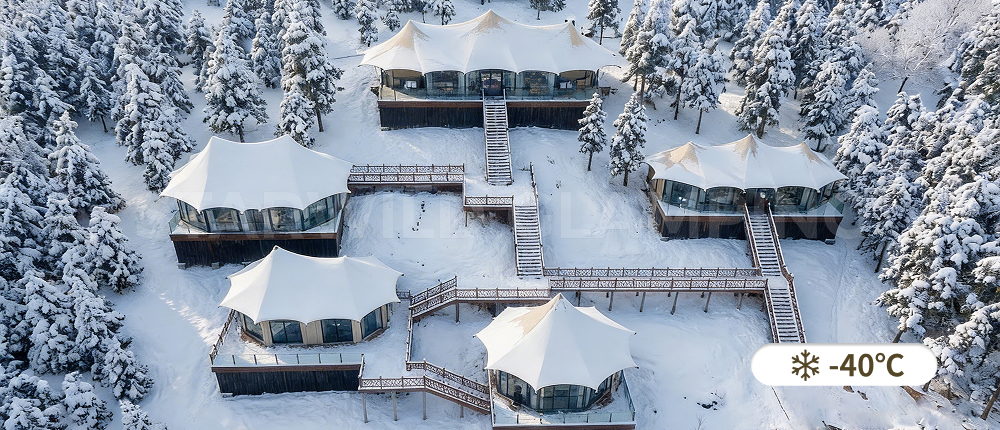
A commercial-grade glamping tent must be treated as a semi-permanent building rather than temporary camping gear. It must satisfy strict municipal safety codes and withstand intense localized weather conditions.
The skeletal structure of a glamping hotel tent provides safety and longevity. Premium structures utilize one of two core frame materials:
Q235 Hot-Dip Galvanized Steel: Highly favored for large safari lodges and heavy-duty cabins. Hot-dip galvanization coats the carbon steel with a rust-proof zinc protective layer, protecting the frame from high humidity, coastal saltwater spray, and extreme precipitation. These frames are incredibly heavy, providing massive ballast resistance against high winds.
Structural Aluminum Alloys (6061-T6): Often used in geodesic domes and premium wedding marquees. This aerospace-grade aluminum offers a high strength-to-weight ratio, natural corrosion resistance, and exceptional flexibility. It allows for modular, easy-to-install designs without compromising load-bearing strength.
High-end commercial structures feature certified wind load ratings of 100 to 120 km/h and robust snow-bearing capacities. These structural engineering stamps are vital for securing building permits from local Authorities Having Jurisdiction (AHJ) in regions like California, Colorado, or the European Alps.
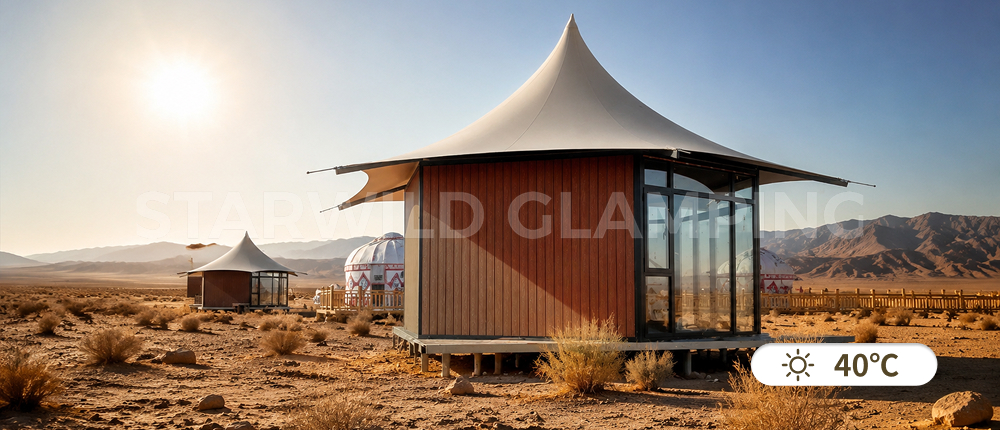
The outer membrane of a glamping hotel tent acts as the primary shield against UV rays, heavy rain, wind, and mold.
PVDF (Polyvinylidene Fluoride) Coated PVC (typically 850g/m²): This represents the industry standard for high-end resort tents. PVDF-coated membranes are completely waterproof, flame retardant, and reflect solar radiation to minimize greenhouse heating inside the tent. Crucially, the PVDF layer is slick and self-cleaning; rain washes away dust, tree sap, and bird droppings.
Heavy-Duty Polyester Canvas with Waterproof Coatings: Canvas offers a rustic, classic luxury aesthetic. Modern commercial canvas is heavily treated with UV inhibitors, flame retardants, and rot/mildew-resistant agents to prevent fabric rot in high-humidity forests or coastal areas.
A guest paying $400 a night expects 5-star hotel comfort, whether there is a blizzard outside or a scorching summer sun. Effective thermal management is crucial.
Single-layer tents offer zero thermal protection. High-performing 4-season glamping hotel tents employ a dual-layer strategy:
Outer Layer: The PVDF/PVC shell stops wind and rain.
Air Gap & Insulation Layer: An interior insulation lining is suspended inside the frame. Materials like foil-faced double bubble wrap insulation or high-density synthetic wool insulation (sandwiched between decorative inner fabrics) reflect radiant heat. During summer, they keep the cool indoor AC air locked in; during winter, they trap heat from fireplaces and heaters.
Inner Aesthetic Canvas: A beautiful inner lining (often customized fabric or cotton canvas) covers the insulation, creating a cozy, premium indoor ambiance.
To achieve 4-season compliance, resort developers integrate active climate control:
Mini-Split Heat Pumps: Quiet, efficient, and capable of both heating and cooling. They are easily mounted to timber partition walls or structural frame poles.
Wood-Burning or Pellet Stoves: A massive selling point for winter glamping. Stoves provide a cozy visual fire, turning a freezing winter night into a romantic retreat. Proper stove-pipe exits must be engineered through fire-retardant flashing panels.
Hydronic Underfloor Heating: Best suited for resorts built on elevated timber decks. Running warm water pipes beneath the floorboards keeps the tent evenly warm from the ground up, reducing energy consumption compared to overhead heaters.
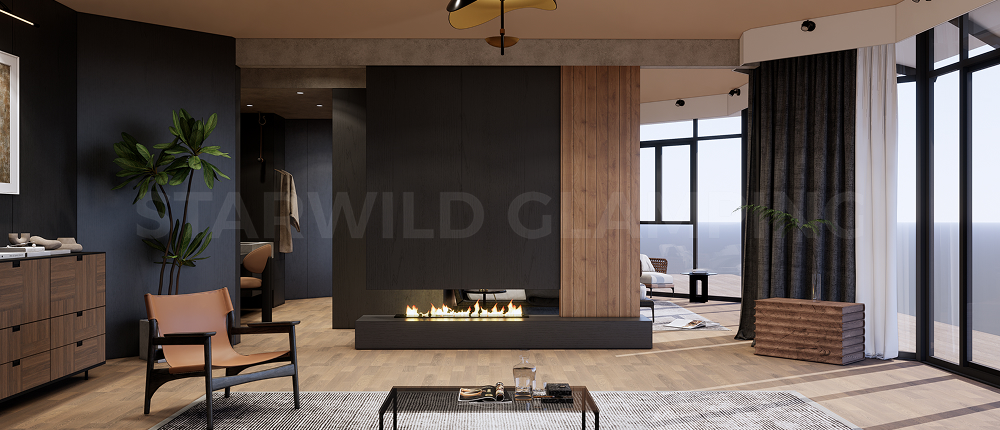
When warm guests sleep inside a cold tent, condensation naturally forms on the inner walls. If left unmanaged, this leads to mold, mildew, and ruined interior furnishings.
1. Strategic Ventilation Vents: Incorporate low-level fresh air intake vents and high-level exhaust vents to harness the natural chimney effect.
2. Exhaust Fans: Install low-noise solar-powered or electric exhaust fans in bathrooms and kitchenettes to expel moisture directly outside.
3. Breathable Fabric Selections: Ensure the inner lining consists of breathable, moisture-wicking materials that prevent water vapor from liquefying on surfaces.
From a financial planning perspective, B2B buyers must analyze the life cycle costs of their glamping units.
| Component | Lifespan | Primary Maintenance Action |
| Galvanized Steel/Alloy Frame | 15 - 25+ Years | Periodic inspection of anchoring bolts and joint tighteners |
| PVDF/PVC Outer Membrane | 8 - 10 Years | Annual pressure washing with mild soap; check for tension tightness |
| Specialized Inner Canvas | 5 - 8 Years | Regular ventilation to keep fabric dry and mold-free |
| Raised Timber Platform / Decks | 10 - 15 Years | Sealing or oiling timber once a year to prevent dry rot and insect damage |
By choosing premium materials from a manufacturer with long-term engineering expertise, resort owners ensure their cabins remain operational and attractive for decades, keeping ongoing maintenance Capital Expenditure (CapEx) to an absolute minimum.
Investing in 4-season glamping hotel tents is not merely about surviving the cold; it is a strategic business model that unlocks consistent, high-yield revenue throughout all four seasons. By combining robust structural engineering with advanced multi-layer insulation and active temperature regulation, resort developers can confidently market their glamping site as a year-round luxury eco-resort.
Partnering with an experienced manufacturer like Starwild ensures your tents are engineered to withstand extreme climates, comply with strict safety certifications, and keep your occupancy rates at an all-time high, no matter the season.
Glamping resorts typically use a combination of active and passive systems. Active heating and cooling are dominated by high-efficiency mini-split heat pumps, which provide quiet climate control. For colder regions, resorts often install romantic wood-burning stoves, pellet heaters, or hydronic underfloor heating under the timber platform. Passively, tents rely on dual-layer insulation linings (such as foil bubble wrap) and cross-ventilation windows to block external radiant heat and retain indoor temperatures.
Yes, but only if they are engineered commercial-grade structures. High-quality tents, such as those manufactured by Starwild, feature hot-dip galvanized steel or structural-grade aluminum alloy frames rated to withstand wind speeds of 100 to 120 km/h. They are structurally engineered to handle heavy snow loads by using tensioned PVDF roofs with steep pitches (such as safari style or geodesic domes) that allow snow to naturally slide off rather than accumulating.
In commercial hospitality, mold and mildew can ruin guest experiences, trigger health code violations, and quickly degrade fabric structures. Tents situated in forests, lakesides, or high-humidity environments are highly susceptible to moisture buildup. Choosing membranes treated with anti-microbial and mildew-resistant coatings, along with proper ventilation designs (such as high-level exhaust vents and moisture-wicking inner linings), is essential to protect your investment and guarantee a fresh, premium guest environment.
No, one of the primary benefits of glamping hotel tents is that they are considered semi-permanent, non-invasive structures. They are usually installed on elevated timber decks supported by ground screw piles or eco-friendly piers. This setup minimizes soil disruption, bypasses many of the strict building regulations associated with permanent concrete foundations, and allows for easier permitting while protecting the surrounding natural environment.