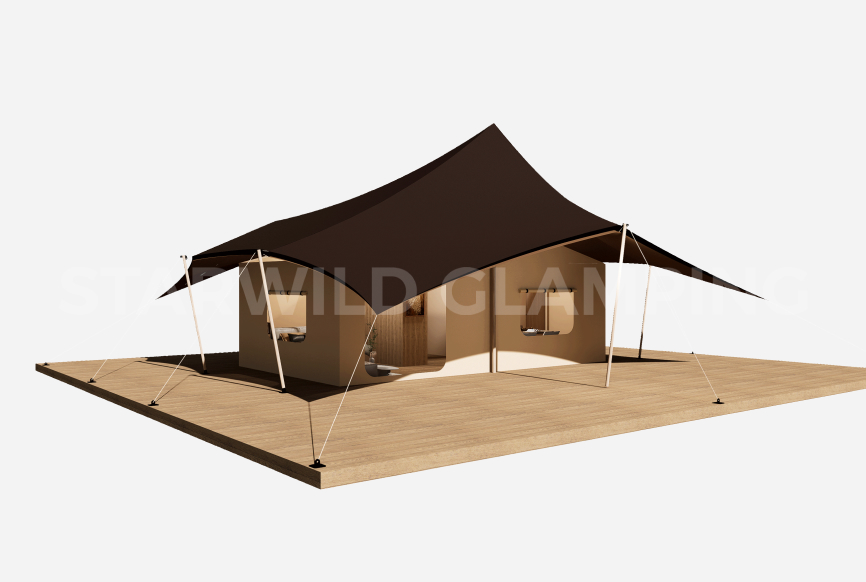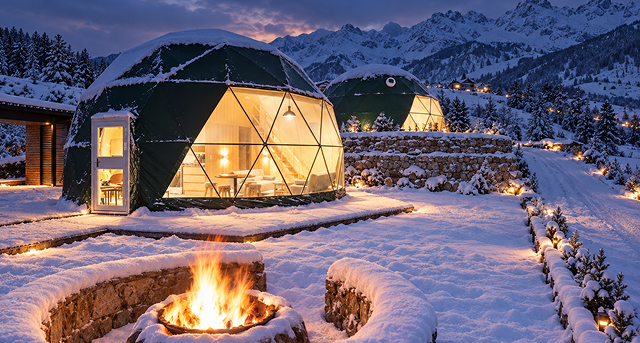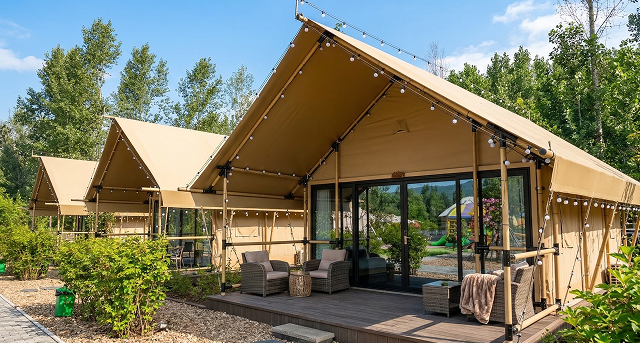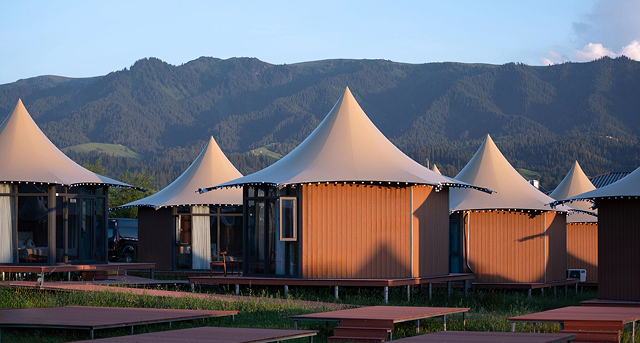

The Middle East, particularly Saudi Arabia (Vision 2030) and the UAE, is witnessing a massive surge in luxury desert tourism. According to Grand View Research (2025), the glamping market in the Middle East is expanding at a significant CAGR as governments diversify into high-end eco-tourism.
However, the desert presents the harshest environment for fabric structures. To protect your investment and ensure guest comfort, luxury lodge tents must be engineered specifically for high UV exposure, extreme heat, and sandstorm stability.
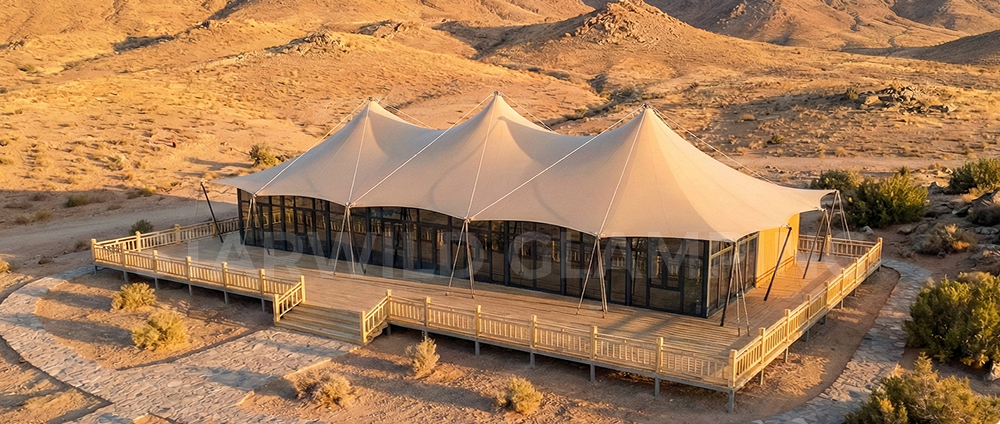
In desert regions where temperatures regularly exceed 45°C (113°F), a standard tent becomes an oven. Professional lodge tents utilize advanced thermodynamics to maintain luxury hotel standards.
The first line of defense is a high-density PVC membrane with a specialized PVDF (Polyvinylidene Fluoride) coating.
Data Insight: According to industrial fabric technical specs, PVDF-coated membranes can reflect up to 75-80% of solar radiation. This prevents the "greenhouse effect" common in lower-grade tents.
Citation: *Journal of Industrial Textiles (2024)* reports that PVDF-treated materials significantly reduce surface heat absorption compared to standard PVC or heavy canvas.
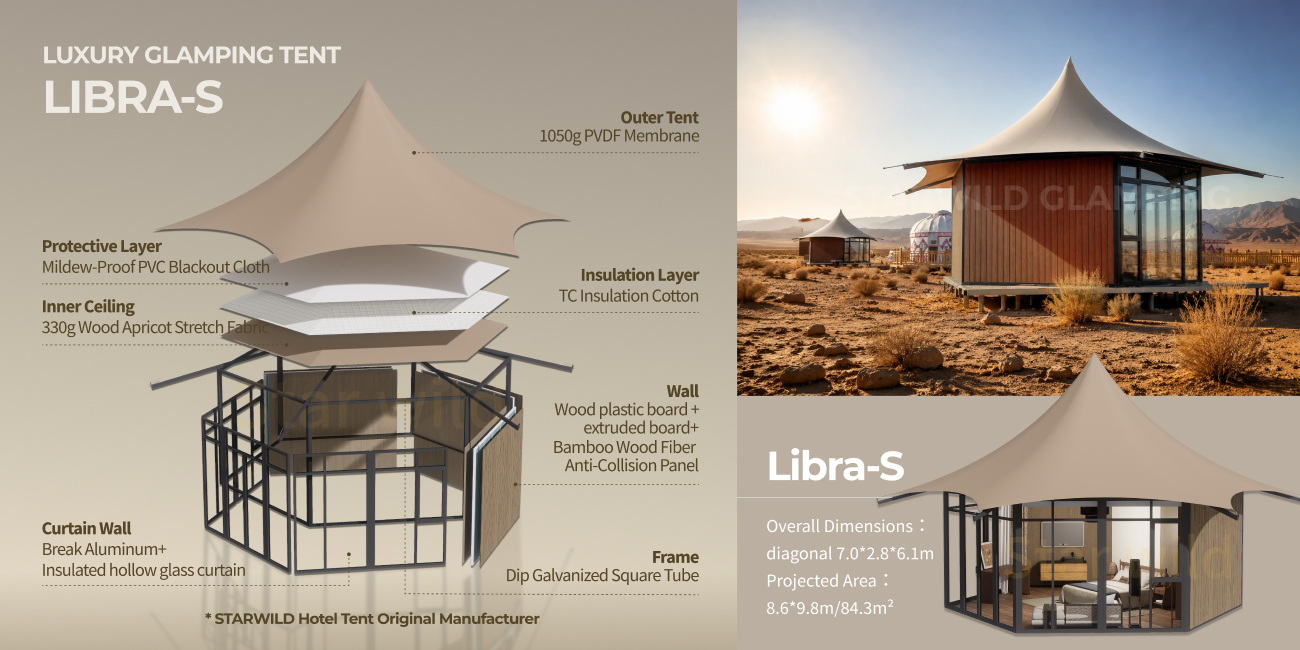
Starwild luxury glamping tents for the Middle East feature a four-layer roof system design. A significant air gap between the outer flysheet and the inner tent acts as a natural thermal buffer. This air cushion prevents direct heat transfer, keeping the inner living space significantly cooler.
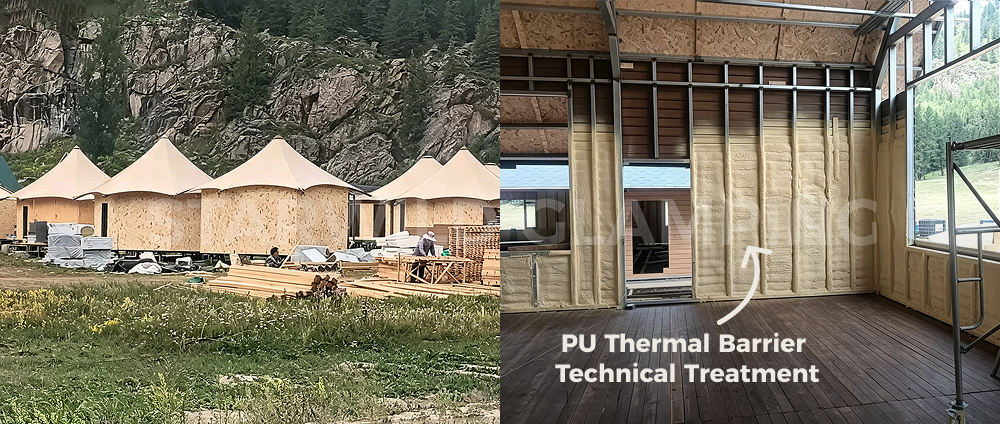
Beyond standard membrane reflectivity, Starwild's latest R&D breakthrough focuses on an upgraded Polyurethane (PU) composite insulation process. This advanced technical treatment creates a high-efficiency thermal break, drastically elevating the tent’s overall heat isolation and thermal regulation capacity.
Field-Tested Stability (±40°C Endurance): According to rigorous internal engineering audits, this upgraded PU technology allows our luxury structures to maintain consistent internal climate stability even when subjected to extreme temperature differentials of ±40°C (±72°F).
Strategic Advantage: For desert resorts where temperatures fluctuate from freezing nocturnal lows to blistering midday highs, this technology ensures a sanctuary of comfort for guests while significantly reducing energy consumption for AC systems.
UV radiation is the silent killer of tent fabrics. In the GCC region, standard polyester can degrade and tear within 18 months.
Starwild eco lodge tents utilize membranes with integrated UV-stabilizers.
Standard Reference: Materials are tested to meet ASTM G154 or ISO 4892 standards for accelerated weathering, ensuring the fabric retains its tensile strength and color for 8-10 years even under constant desert sun.
A sandstorm can exert massive lateral pressure.
Engineering Standard: Commercial lodge tents must be rated for wind speeds of at least 100-120 km/h. Heavy-duty hot-dip galvanized steel frames or reinforced aluminum alloys provide the necessary ballast.
Anchoring: In deep sand environments, Starwild utilizes deep helical ground screw piles or concrete-weighted pre-embedded method to ensure the structure remains rooted during high-velocity desert winds.
Building a luxury desert camp requires more than aesthetic appeal; it requires engineering that respects the environment. By utilizing UV-stabilized PVDF membranes and advanced multi-layer thermal insulation, developers in the Middle East can ensure a 5-star guest experience while maximizing the lifespan of their assets.
High UV intensity in the Middle East causes rapid "photo-degradation" in standard fabrics, making them brittle and prone to tearing. Commercial-grade lodge tents use PVDF-coated membranes with chemical UV-blockers (tested to ASTM G154 standards) to extend fabric life to over 8 years, protecting the resort owner's capital investment.
Cooling is achieved through a combination of "passive" and "active" methods. Passively, tents use heat-reflective PVDF roofs and air-gap insulation between multiple roof layers. Actively, the tents are fitted with high-BTU HVAC systems, often integrated into custom-made interior cabinetry to maintain a consistent indoor temperature of 22°C-24°C.
Yes. Professional lodge tents are designed as semi-permanent structures with structural wind-load ratings typically between 100-120 km/h. They utilize reinforced frames and deep helical screw anchoring systems to resist the lateral forces and suction effects created during intense desert sandstorms.
To maintain the self-cleaning properties of PVDF membranes, we recommend a low-pressure wash every 3-6 months. Removing sand and salt buildup prevents abrasion and ensures the roof continues to reflect maximum solar radiation, keeping the interior cooler.
Sources & Citations:
1. Grand View Research: Global Glamping Market Growth Analysis 2024-2030.
2. ASTM G154: Standard Practice for Operating Fluorescent Ultraviolet (UV) Lamp Apparatus for Exposure of Nonmetallic Materials.
3. Journal of Industrial Textiles: Analysis of Thermal Conductivity in PVDF-Coated Architectures (2024).