
As glamping continues to grow globally, luxury safari tents are becoming an increasingly attractive accommodation solution for resorts, eco-retreats, and outdoor hospitality projects.
For B2B developers, however, sourcing a luxury safari tent is not simply about finding the lowest factory price. The real challenge is controlling the total project cost, ensuring technical compliance, maintaining quality, and building a supply chain that can scale.
Sourcing directly from an experienced Chinese luxury safari tent manufacturer can help developers improve procurement efficiency, customization, production capacity, and project coordination.
This guide explains what international buyers should consider when sourcing luxury safari tents from China.
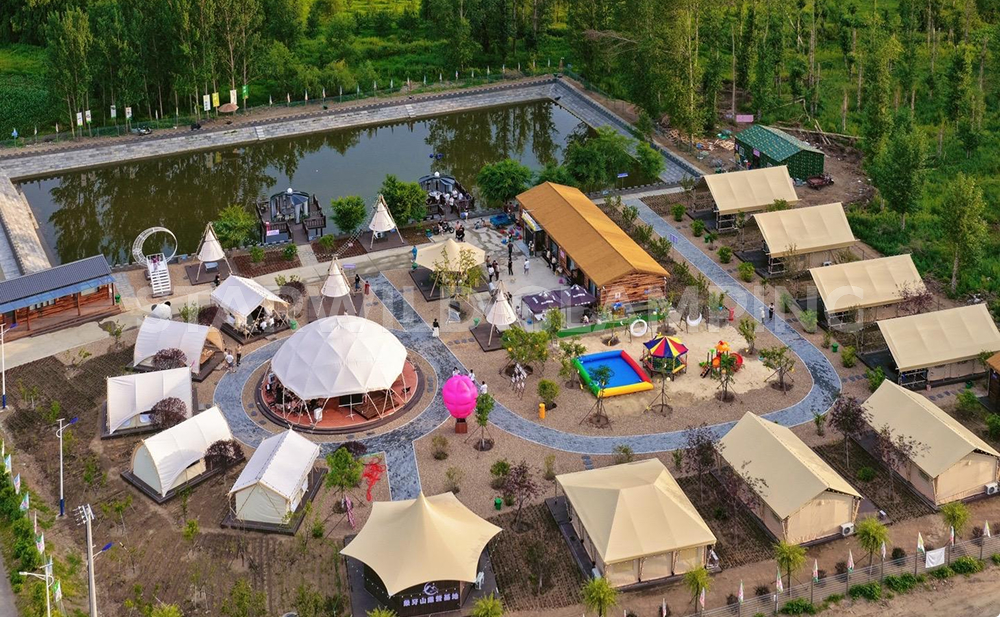
China is an important manufacturing hub for glamping products, including safari tents, glamping tents, furniture, bathrooms, and supporting resort facilities.
Direct sourcing can provide several advantages.
Buying directly from a manufacturer can reduce intermediary costs. However, the lowest factory quotation does not always mean the lowest total project cost.
Buyers should compare:
Manufacturing Cost + Logistics + Duties + Installation + Infrastructure = Total Project Cost
Commercial glamping projects often require customized, a manufacturer with strong OEM/ODM capabilities can adapt products to different resort concepts.
For projects with 20, 50, or 100+ accommodation units, production capacity and consistency become critical.
Developers should evaluate: Factory capacity; Quality control; Production scheduling; Packaging; Spare parts; Batch delivery capability
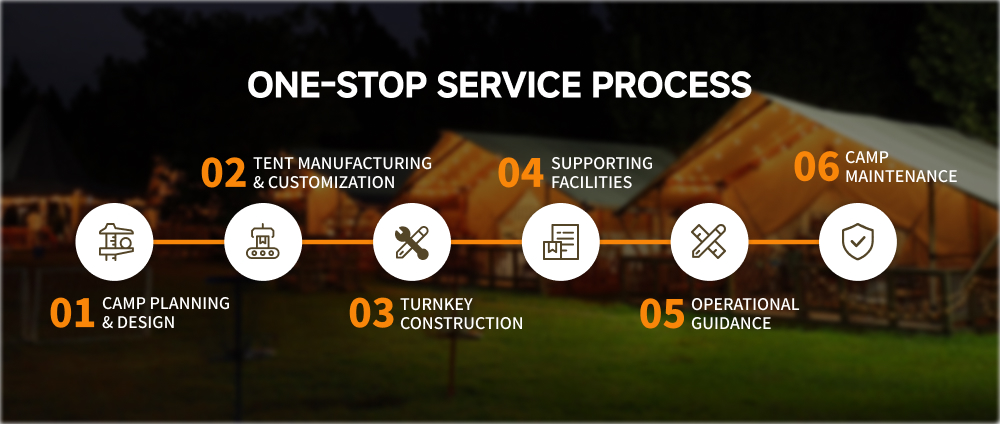
4. One-Stop Project Support
An experienced manufacturer may provide services beyond tent production, including: Planning; Design; Manufacturing; Interior furnishing; Bathroom solutions; Construction; Installation; Operational support; Maintenance
This can simplify communication and reduce coordination between multiple suppliers.
One of the most common mistakes in B2B sourcing is comparing suppliers only by unit price.
Actually:
Total Landed Project Cost = Factory Cost + Logistics + Site & Construction Costs + Supporting Infrastructure
When requesting quotations, buyers should always ask for a detailed BOM (Bill of Materials) and clearly define what is included and excluded.
The ROI of a glamping resort depends on much more than tent prices.
A simple accommodation revenue model is:
Annual Revenue = Number of Units × ADR × Occupancy Rate × 365
For example, a hypothetical 20-unit resort with a US$300 ADR and 55% average occupancy would generate approximately:
20 × $300 × 55% × 365 = $1,204,500
This is an illustrative calculation, not a guaranteed return.
For a serious investment decision, developers should calculate annual operating cash flow and total project investment, rather than relying on a fixed “18–24 month ROI” assumption.
The appropriate number of units depends on land size, market demand, infrastructure, and investment strategy.
Suitable for pilot projects, farm stays, private estates, and small retreats.
Suitable for boutique glamping resorts with facilities such as restaurants, reception areas, pools, or activity spaces.
A commercial-scale development where manufacturing capacity, logistics, quality control, and installation become increasingly important.
Large or multi-phase developments require standardized specifications, production schedules, quality-control systems, and long-term spare-parts planning.
For developers planning future expansion, choosing a manufacturer capable of reproducing the same product consistently can be a major advantage.
Technical requirements vary by country and project.
Importantly, a manufacturer's technical documentation does not automatically mean that a project complies with all local building regulations.
Developers should work with qualified local architects, engineers, and permitting authorities to confirm the requirements for their specific project.
Price should not be the only selection criterion.
Before placing an order, evaluate:
Factor | Why It Matters |
Manufacturing experience | Reduces production risk |
Production capacity | Important for large projects |
Engineering capability | Supports site-specific requirements |
Customization | Enables unique resort concepts |
Quality control | Reduces defects |
Project references | Demonstrates experience |
Logistics | Reduces delivery risk |
Installation | Simplifies construction |
After-sales service | Supports long-term operation |
The best manufacturer is not necessarily the cheapest.
For a commercial glamping project, the ideal partner should balance:
Quality + Engineering + Customization + Delivery + Compliance + Long-Term Support
For a small project, buying a tent may be relatively straightforward.
For a commercial resort, however, the project involves multiple interconnected systems.
An integrated manufacturer can potentially coordinate:
Planning → Design → Manufacturing → Interior → Construction → Installation → Operations → Maintenance
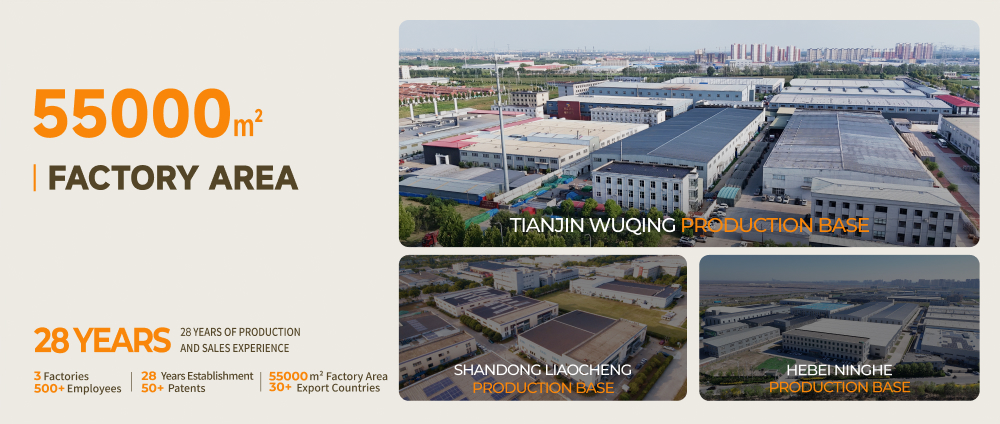
Starwild has more than 20 years of industry experience, serves customers in more than 30 countries and regions, and provides integrated planning, design, manufacturing, construction, and management services.
One of our glamping projects in Sichuan involved 21 luxury glamping tents, with services covering master planning, site design, customized manufacturing, interior styling, and turnkey construction.
For developers planning multi-unit or multi-phase projects, this type of integrated capability can simplify procurement and improve consistency.
There is no standard price. Cost depends on size, materials, structure, interior, bathroom, customization, quantity, shipping, and installation.
Direct sourcing can reduce intermediary costs, but buyers should compare total landed project cost rather than factory price alone.
Yes, but the structure must be designed for applicable environmental loads, while insulation and heating should be considered.
Foundation requirements depend on the structure, soil conditions, site, loads, and local regulations.
Sourcing luxury safari tents from China can provide B2B developers with advantages in manufacturing cost control, customization, production scalability, and project coordination.
But successful procurement is not about finding the cheapest tent.
The better strategy is to select a manufacturer that can support the complete project lifecycle:
Design → Manufacturing → Quality Control → Logistics → Installation → Operation
By evaluating total landed cost, technical capability, project experience, compliance documentation, and long-term support, developers can reduce procurement risk and create a stronger foundation for profitable and scalable glamping projects.
Prepare your:
Project location; Number of units; Tent type; Site conditions; Climate; Bathroom requirements; Interior requirements; Expected opening date; Shipping destination
Then work with an experienced manufacturer to develop a customized solution and B2B quotation.