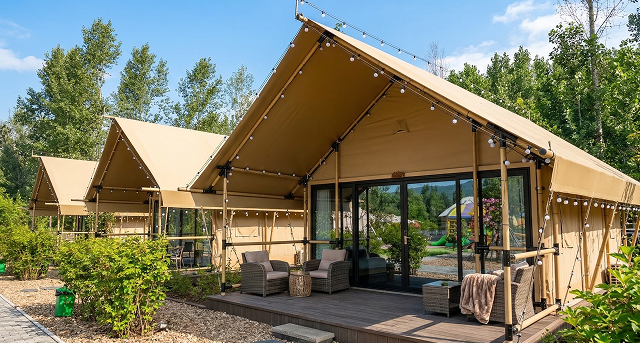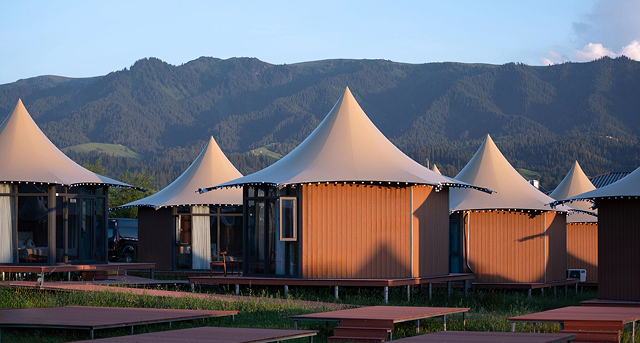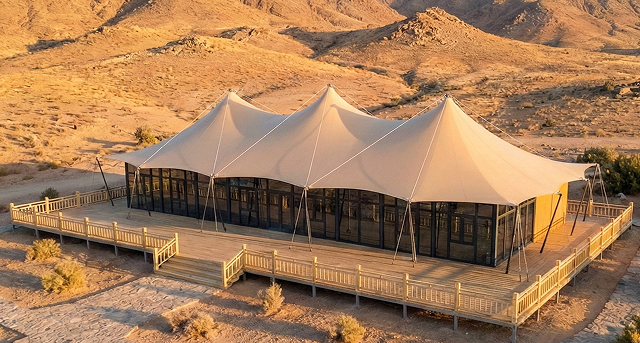

In Western markets, luxury is no longer defined solely by comfort; it is defined by Sustainability and Responsibility. According to the *2024 Booking.com Sustainable Travel Report* , over 75% of global travelers want to stay in eco-friendly accommodations. For resort developers in the US and Europe, sourcing luxury lodge tents that meet both environmental standards and strict safety codes (like NFPA 701) is the key to market entry.
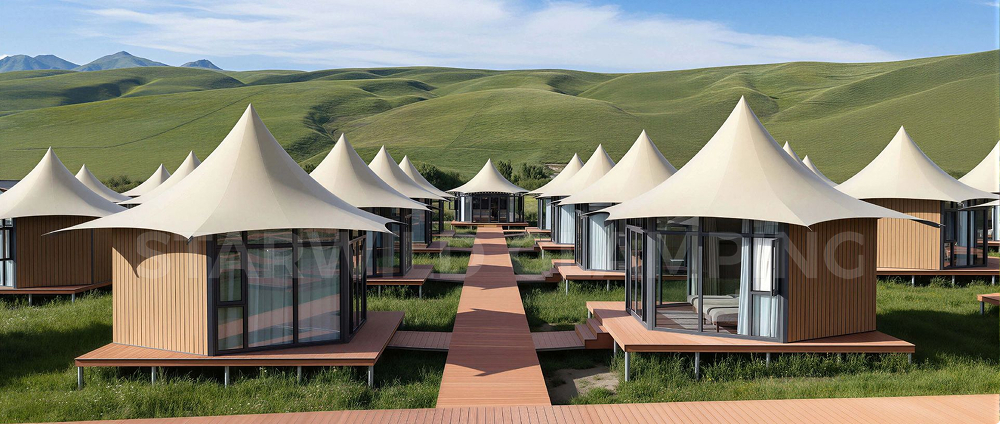
Eco-conscious buyers look for a cradle-to-grave environmental impact.
Modern luxury lodge tents prioritize durability to reduce waste.
Insight: Using PVDF-coated PVC is actually an eco-friendly choice in a commercial context because it lasts 10+ years, compared to cheaper plastics that end up in landfills every 2 years.
Citation: The *European Environment Agency (EEA)* emphasizes that extending product lifespans is a core pillar of the "Circular Economy" in hospitality.
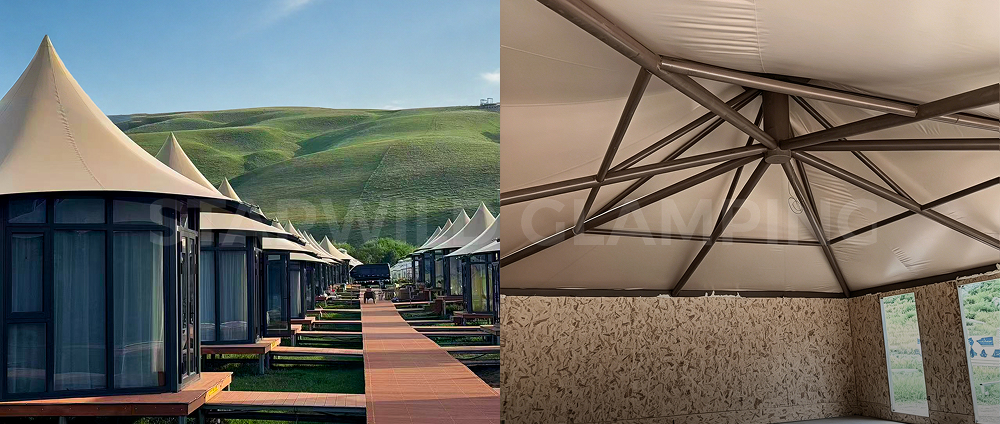
Aluminum: Aerospace-grade aluminum is 100% recyclable without losing its physical properties.
Galvanized Steel: Known for its extreme longevity (25+ years), reducing the need for raw material extraction for replacements.
Meeting safety regulations is mandatory for commercial glamping sites.
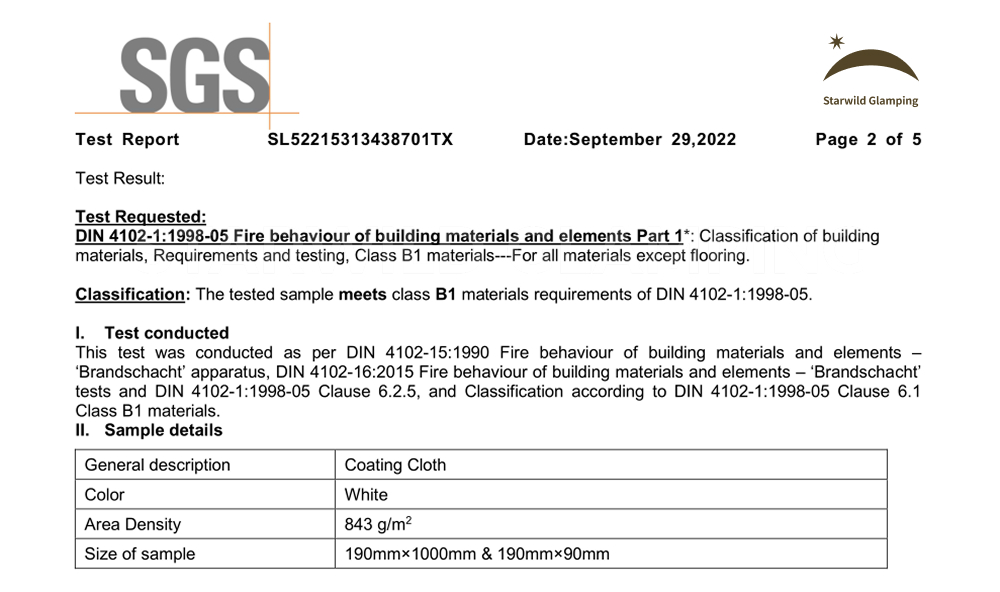
In the US, any tent used for public lodging must comply with NFPA 701. In Europe, the DIN 4102 B1 standard is the benchmark.
Technical Detail: Starwild fabrics are treated to be inherently fire retardant. They are self-extinguishing, meaning they will not carry a flame once the ignition source is removed.
Source: *National Fire Protection Association (NFPA)* guidelines for Flame-Resistant Textiles.
To bypass many permanent building permits in the EU and US, lodge tents are often classified as "semi-permanent" because of their non-invasive foundations.
Ground Screw Piles: These eliminate the need for concrete slabs. They can be removed entirely, returning the land to its original state.
Citation: The *Global Sustainable Tourism Council (GSTC)* recognizes low-impact, removable structures as a best practice for biodiversity conservation.
By aligning your procurement strategy with eco-friendly materials and robust safety certifications, you aren't just building a camp; you are building a future-proof brand. Sustainable luxury lodge tents offer the perfect balance of guest comfort, municipal compliance, and environmental stewardship.
An eco-friendly lodge tent is characterized by its long lifespan (10+ years), the use of recyclable materials like aluminum or galvanized steel, and a design that requires no permanent concrete foundations. By utilizing removable ground screw piles, the structure protects the local ecosystem and maintains soil health.
Yes. For any commercial glamping project where you are hosting paying guests, the local fire marshal will almost certainly require fabrics that meet NFPA 701 standards. This certification ensures the tent membrane is flame-retardant and safe for public use.
In many European jurisdictions, lodge tents are classified as semi-permanent structures because they do not have permanent foundations and are theoretically removable. This classification often simplifies the planning permission process compared to permanent brick-and-mortar hotel buildings.
Absolutely. High-end lodge tents utilize membranes that are free from heavy metals and meet international environmental standards (such as REACH or RoHS) to ensure that no harmful VOCs (Volatile Organic Compounds) are released, providing a safe, healthy indoor environment for guests.
Sources & Citations:
1. Booking.com: 2024 Sustainable Travel Report.
2. NFPA 701: Standard Methods of Fire Tests for Flame Propagation of Textiles and Films.
3. European Environment Agency (EEA): Circular Economy in the Construction and Hospitality Sector (2024).